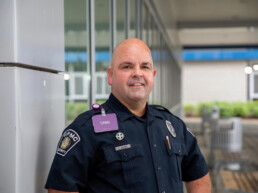

It was a cold winter’s day in Harrisburg, Pennsylvania, but David Gibbons warmly greeted Tom Alton, a Shuttle Bus Operator at UPMC Harrisburg. “Long time, no see!” laughed David, before Tom replied. “Hey, I saw that movie you told me about—it was really good! I didn’t really like the ending, but it was good!” Tom shared, David cheerfully shaking his hand and taking a moment to connect with an employee over a shared love of movies.
Despite a busy role at UPMC, these are the moments that keep David Gibbons going.
Serving since 2023 as both the regional president and senior vice president of the Health Services Division at UPMC, David’s days are quite full—often starting at 4:30 am with a morning workout before he heads to one of the areas he oversees in UPMC’s six geographical regions: Northwest Pa. & New York, Maryland & West Virginia, North Central Pa., West Central Pa., and Central Pennsylvania. David is no stranger to UPMC, having served in various leadership roles beginning in 2009. Having started his career as a nurse, David’s lifelong journey in health care has been shaped by colleagues and leaders who invested in him as a professional and a person.
UPMC Careers sat down with David to hear more about his leadership role at UPMC and why he is passionate about building up communities both around and within UPMC’s hospitals.
“What I try to embody every day is compassion and truly caring about the team. And it's not a false sense of caring; it's reality.”
What is your role here at UPMC?
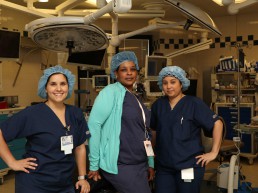
David: My role is overseeing many of the regions of UPMC from Maryland to Central Pa., West Central Pa, North Central Pa. and beyond. I have the great pleasure of working with a phenomenal leadership team, and each of the those teams have their respective staff. Together, we’re driving initiatives for quality and safety and regulatory performance.
But also more importantly is the journey of strengthening our culture. That’s been a really fulfilling part of my role, and it’s also intentional. The beauty of it is we get to connect with people and amazing teams every single day, which is phenomenal.
Can you share more about UPMC’s regional hospitals and what work happens in those facilities?
David: We have six distinct regions for the Health Services Division, and [in] each region, each hospital has its own culture that is long standing. But there’s also a blended culture with UPMC, which is remarkable to watch that journey, particularly when a hospital integrates with UPMC.
As we drive different initiatives, you recognize there are differences in each hospital. Maybe it’s a physical difference with the size of the facility or they have different resources; they may not have every program that a larger hospital has. That is that’s part of the challenge, but it’s a great challenge because I have the opportunity to witness how these teams transform an idea from paper to reality. It’s incredible.
How does UPMC go about providing health care in its smaller communities?
David: In every community that we serve, the community members and the business leaders welcome UPMC—they welcome our clinical presence there.
I think a great way to highlight the growth of UPMC is that when we affiliate with a hospital, communities are often concerned that the hospital UPMC will put those patients in one of our big [urban] centers. And that’s really not the case at all.
We can share services [from our larger hospitals] with a remote community, whether it’s in person or telemedicine. It’s remarkable, and we’ve enhanced each market with our breadth of services and the level of quality care. It’s amazing to be able to see the actual benefit that comes to a community just to have good health care right there.
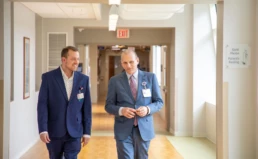
“We celebrate the highs together and we're also there to support each other during a very challenging time. And you know, from a leadership style, to me, that's success.”
What is your leadership philosophy?
David: I graduated from nursing school when I had just turned 22. I started my clinical career in oncology, and I say that I went from 22 to 62 in a matter of 30 days. I was suddenly seeing life very differently and how vulnerable people are. There was a great lesson learned in that time: that when someone is challenged with a really with a terminal illness, everything else doesn’t really matter. It’s about them and the compassion of the care, and that’s what’s most fulfilling for the patient.
Those early experiences really grounded me as a leader to focus on the individual, because if you don’t have alignment or we don’t have a connection, how can you lead? If you don’t know your team as a leader and they don’t know you, then they just work in parallel. What I try to embody every day is compassion and truly caring about the team. And it’s not a false sense of caring; it’s reality.
We celebrate the highs together and we’re also there to support each other during a very challenging time. And you know, from a leadership style, to me, that’s success. If you don’t build those connections, you’re missing out on so much of life, whether it’s professionally or personally.
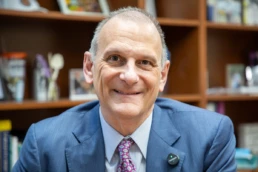
Thinking back to you started your career at the bedside, is there anything from those days that you learned that still shows up in your work today?
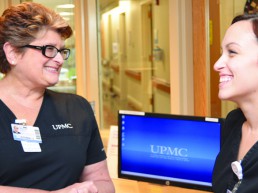
David: The lesson I didn’t recognize in the moment was the impact of relationships with coworkers. We’re friends. We’re a UPMC family and I had the pleasure of working as a registered nurse, as a clinician, and as a unit director of an oncology unit at a hospital that ultimately became a UPMC affiliated hospital.
There are simple things I remember: at holidays, we would have potluck lunches or dinners that staff contributed to. On breaks, we would eat together. That friendship with your coworkers—those relationships—are really powerful. We celebrated the highs of someone’s life: their daughter getting married or they have a grandchild, all the way to the death of a family member. I realized how powerful the work family is really. I think [t’s one of the core threads of UPMC.
I think all of us are probably where we’re at because of who we work and because we found a team that feels like they care and it was a good fit.
I had a difficult journey in that a few years ago, I lost both of my parents in 22 hours. They were declining in health, but the support and love from my coworkers and the team from across UPMC—I can’t imagine it could be any better elsewhere. It was just so sincere and kind. And I felt so supported. Those are the moments when it means the most.
This interview has been edited for length and clarity.
5 Fun Facts about David
1. David loves to cook, and his favorite thing to make when hosting is a great Italian meal.
2. David is an avid photographer, enjoying landscape and nature photography in his spare time.
3. Coffee is no for David, but Diet Coke is a YES! You can catch David enjoying a crisp Diet Coke as an afternoon pick-me-up.
4. To wind down, David enjoys binge-watching a good TV show or movie. A recent favorite was the comedy-drama series Palm Royale.
5. On his morning commute, you can find David queuing up a diverse playlist including everything from Lady Gaga, Heart, Chicago, Journey, and Janet Jackson.